 |
 Welcome to issue no. 1 / 2009 of EWC News. 20th March 2009
|

|
The training and consultancy network
"euro-workscouncil.net"
EWC
News appears four times a year.
You can find past issues in the newsletter archives.
|


|
1.
Works councils discuss a new legal position
|
|
Ministers of Agriculture shall put EWC Directive into effect
At present, the language jurists are checking all 22 language versions of the new Directive so that the content of the legal text is identical in all languages. This will most likely last until April 16th, 2009. The definite adoption is planned for April 23rd, 2009 by the EU Ministers of Agriculture and to be more precise as a so-called A point (i.e. the law is passed without discussion). After the signing by the European Parliament (probably on May 6th, 2009) the EWC Directive is published in the Official Bulletin of the EU and becomes effective.
Specialist conference in Hamburg blew up all expectations
The training and consultancy network "euro-workscouncil.net" carried out for the first time a specialist conference for European works councils on January 26th, 2009. Altogether 64 participants, among this EWC members from 33 companies, scientist from four universities, representatives from advice institutes and foundations, lawyers as well as trade union officers of DGB, ver.di, IG BCE and IG Metall, followed the invitation to inform themselves about the new EWC Directive in Hamburg.
Besides the description of the legislation process by the European MP Karin Jöns and the acting Secretary General of the European Trade Union Confederation Reiner Hoffmann the experience report of the EWC chairman of General Motors, Klaus Franz, received particularly big attention. Since a number of registrations could not be taken into account any more due to the immense interest, we offer further dates in the course of the year (see below). Media response to the specialist conference
Further specialist conferences and workshops on the new EWC Directive
The great response to this specialist conference has induced us to offer further dates. Two events will take place soon in cooperation with partners in Italy and Belgium. The programmes are available for download in German language.
Liège, June 22-23rd, 2009 (simultaneous interpretation German -- French available, English on request), specialist conference for European works councils and SE works councils Paris, September 30th -- October 2nd, 2009 (simultaneous interpretation German -- French available, English on request), specialist conference with the French consultancy firm Groupe Alpha
Castle hotel Montabaur, October 12-14th, 2009, workshop with the following topics:
Non-committal appointments to the October workshops are possible over the contact form. We then inform about the programme and the details of the participation on time.
|

 The
EU Council of ministers agreed in Brussels on the new Directive to the
European works council on December 17th, 2008. On the day before the
European Parliament also had agreed in a plenary session with a large
majority (see
The
EU Council of ministers agreed in Brussels on the new Directive to the
European works council on December 17th, 2008. On the day before the
European Parliament also had agreed in a plenary session with a large
majority (see 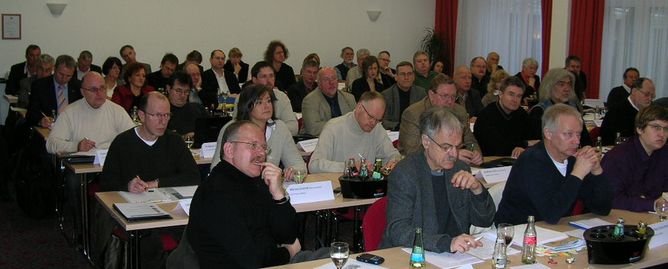

|
2.
European works councils organize action days
|
|
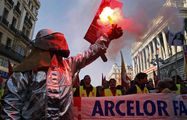
An action day took place at ArcelorMittal on February 10th, 2009. The steel group wants to cut 6,000 jobs in Europe. Although central management had promised the steering committee of the EWC at a meeting in London on December 15th, 2008, to execute without dismissals, the conditions of the voluntary retirement should be negotiated in each country separately. While there are already collective agreements reached in France, Belgium and Luxembourg, negotiations have not even started yet in Poland, Czechia and Romania. The EWC agreement of ArcelorMittal had been signed after the merger in July 2007 (see report in EWC News 2/2007).
The motorcar supplier Bosch experienced a Europe-wide action day in the production centres for brakes in Germany, France, Spain, Italy and Portugal on February 16th, 2009. Workers' representatives of this division had decided in Brussels on January 27th, 2009 on the construction of an own communication structure to exchange information between the locations fast. A list of requirements, which is aimed at a Europe-wide framework agreement was also approved.
There is an European works council at Bosch since 1998 but the different divisions are not represented adequately in it. The European Metalworkers’ Federation (EMF) tries therefore to build up an independent representation structure with a coordination group in the division for brakes. |
|
3. EWC
agreements are updated
|
|
EADS anticipates a new EWC Directive
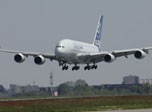
The EWC elects a steering committee and a finance committee consisting of six members each. Plenary sessions take place four times a year. The definition of information and consultation was already taken from the wording of the new EWC Directive. The agreement fixes a procedure for the conclusion of transnational collective agreements. Below this holding EWC there are 4 independent European division works councils in the EADS group, which already exists since some years now, among this one for Airbus.
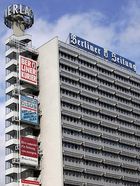
The European works council of the Mecom group constituted itself in an extended composition in Berlin on February 5th and 6th, 2009. Because of the buying up of activities in the Netherlands a renegotiation of the EWC agreement from the year 2006 became necessary. It builds on the EWC of the Norwegian media group of Orkla founded in 2001 and is marked Scandinavian. The German EWC members will however leave the council soon, because Mecom wants to sell its German subsidiary, the publishing house Berliner Verlag, to DuMont Schauberg. Till now, this Cologne media group does not have an EWC yet. The following texts are only available in German:
The merger of the two French energy groups Gaz de France and Suez in July 2008 was a politically controversial measure. In the run-up it came to one of the most important court decisions in the 15-year history of the EWC legislation. So the European works council of Gaz de France could in November 2006 stop the merger by means of an injunction, because its consultation rights had been disregarded by central management. This spectacular legal success made it possible for the workers' representatives of Gaz de France to succeed with a transnational compensation agreement in March 2008 (see report in EWC News 1/2008).
In the meeting of the special negotiation body (SNB) of March 3rd to 5th, 2009 in Paris a new EWC agreement should have been signed. But several separate meetings, in which compromises of the wording were sought, did not lead to a definite result. The negotiations are therefore continued in April 2009. |
|
4. Judgements in
EWC issues
|
|
A Swedish court strengthens European works councils
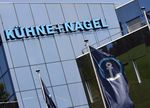
Since 1996 the forwarding company is blocking the EWC foundation with legal obstructions, what after long discussions in 2004 led to a judgement of the European court of justice in Luxembourg. Since after that the employer is insistently delaying the EWC foundation, further legal proceedings followed. In January 2007 the supreme court of justice of Austria judged in favour of the obligation to information (see report in EWC News 3/2007). A similar judgement is still due in Slovakia now. According to Michael Kalis, chairman of the German group works council, the employer will start the EWC foundation if the decision in Slovakia is also clear (see report in EWC News 1/2008).
Meanwhile the family run company is criticized intensely in employer circles, because the numerous verdicts are in the end strengthening the employees' side – and not only in this company. The case has made the European Commission to take precautions against such a behaviour in the new EWC Directive ("lex Kühne + Nagel").
The highest French court of appeal in Paris ("Cour de Cassation") judged in favour of the trade union CGT and against the U.S. computer company Dell on January 21st, 2009. The direct shipment manufacturer has an EWC by virtue of law according to French legislation, since negotiations with the employees' side did not lead to any conclusion. According to the minimum regulations of the EWC legislation only one single seat is allotted to France in the Dell EWC, which caused a quarrel to break out.
The Dell management did not want to accept the CGT representative from the factory in Montpellier and had in the factory Rueil-Malmaison near Paris at first a works council elected and later another EWC delegate. The company has failed in last judicial authority now with that. The court assumes a legislative period of four years, independent of interim changes at local works councils. The CGT representative therefore keeps his seat in the European works council.
In April 2007 the Federal Labour Court in Germany also had to decide on a delegate choice to the European works council (see report in EWC News 1/2008). Unlike at Dell the quarrel was not with the employer, but about an appeal against the election by works council members not voted for.
At present, two cases which concern information and consultation duties of the employer in relation to mass redundancies are heard at the European court of justice in Luxembourg. The first case is based on a trial at the industrial tribunal Liège and concerns the motorcar supplier Mono Car Styling, which is in liquidation. The second case was heard at the highest court of justice in Finland and concerns Fujitsu Siemens Computers. In both cases the court has to decide when an information of the employer in case of restructuring measures can be regarded as being “in time”.
Formally these legal cases do not have any reference to the EWC, the decisions can nevertheless be expected with tension; as they are of prejudging effect for a more exact definition of the employers' responsibilities for the information of the workforce, and thus will also influence indirectly the consultation rights of European works councils. |
 U.S. computer manufacturer
loses lawsuit in France
U.S. computer manufacturer
loses lawsuit in France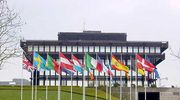
|
5.
Foundation
of European works councils
|
|
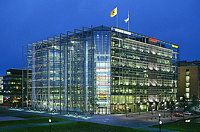
The central management of the Finnish media group Sanoma (on the picture headquarters in Helsinki) would like to avoid the foundation of an European works council. The group has 21,000 employees, branch offices in 20 countries and belongs to the five largest magazine publishing houses in Europe. The Finnish trade unions have rendered a campaign since autumn 2008 to force the entry into EWC negotiations.
The texts of numerous EWC agreements are available on a download page.
|
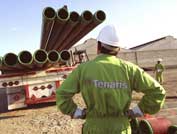
 U.S.
heating system manufacturer founds EWC
U.S.
heating system manufacturer founds EWC|
6. Europe-wide
EWC contract politics
|
|
The European works council of UniCredit signed a joint declaration on training and further education with the central management in Milan on December 16th, 2008. The principles shall apply in all European branch offices of the Italian bank and be supervised by the EWC, which gets the required means to work. In April 2008 two working groups had been formed from twelve representatives each from the human resources management and the EWC to work out appropriate documents. Further information about European works council activities can be found on the internet page of the bank; amongst this, documents on a recently completed EU financed project for the promotion of transnational cooperation. The EWC founded in 2007 after purchase of the German HypoVereinsbank has one of the best EWC agreements in Italy (see report in EWC News 1/2007).
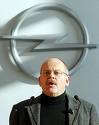
The EWC of General Motors agreed with central management on a Europe-wide framework agreement on January 12th, 2009. The most important component was the promise of the employer to abstain from shutdowns and redundancy despite the sales crisis. In the framework agreement minimum standards for production cuts were fixed and flexible customizations of the working time were made possible. The European works council thus proofed once more that it can operate like a " full-functional group works council ", said its chairman Klaus Franz (photo) on the EWC specialist conference of the training and consultancy network " euro-workscouncil.net " on January 26th, 2009 in Hamburg. So far a transnational agreement of this kind had never been signed before in a single company.
In view of the events within the days after that the promise of the employer is, however, no longer up-to-date. The Swedish subsidiary Saab registered insolvency on February 20th, 2009. At present, the separation of Opel and Vauxhall from the U.S. mother group into the legal form of an European Company (SE) is being discussed. The European headquarter of General Motors and the European works council reached an agreement during a meeting in Rüsselsheim to start negotiations about the future company structure and the consequences for the employees on March 12th, 2009. |

|
|
|
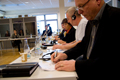
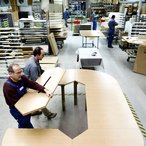
The DVB Bank changed to a European Company (SE) on October 1st, 2008. The supervisory board still consists of nine members, thereof three employee representatives. The 13 members of the SE works council come from Germany, the UK, the Netherlands, Norway and Greece. The DVB Bank with seat in Frankfurt is specialized in transport financing.
SGL Carbon from Wiesbaden has the legal status of SE since January 23th, 2009. An agreement with representatives of the workforce had been completed at the end of November 2008. The manufacturer of carbon products will have a supervisory board from twelve members on a 50/50 basis also in future. Four from the six workers' directors come from Germany and one each from Poland and the UK. A SE works council with 13 members from seven countries will replace the European works council founded in 1996.
Since February 3rd, 2009 Gesellschaft für Konsumforschung (GfK group) in Nuremberg has been a SE. Three workers' representatives belong to the nine-headed supervisory board of the worlds fourth largest market research firm: from Germany, the Netherlands and the United Kingdom. Every country has at least one seat in the SE works council which meets once per year. A steering committee carries out regular business, its seven members come from different countries and meets 3 times per annum.
The GfK agreement is similarly policymaking as the SE agreement completed in December 2008 at the adhesive producer tesa (see report in EWC News 4/2008): central management and SE works council can take joint initiatives on cross border topics, the SE works council can set up temporary committees to certain topics or projects, the SE works council can become active on request in countries without local works council and in case of disputes arising from the SE agreement a three headed arbitration body is foreseen.
Building machine manufacturer avoids an equal supervisory board
On February 19th, 2009 a SE agreement for the automotive and engineering group MAN was signed at the seat in Munich which provides a 16-headed supervisory board on a 50/50 basis. A supervisory board of this size had never before been formed by SE agreement. Even groups like BASF, Allianz or Fresenius did not want to accept more than twelve mandates (thereof six workers' directors). At MAN there are two trade union officers from IG Metall among the eight workers' directors, four works council members from Germany and two workplace representatives from other countries.
The European works council founded in 1996 will soon be replaced by a SE works council to which 26 members belong to. The select committee composed of nine members meets regularly with the central management. The SE agreement of MAN goes in many points beyond the legal minimum standards and can be seen as a milestone with regards to the participation of employees in the SE. Already in April 2006 a SE agreement was signed for the daughter company MAN Diesel, the first ever in Germany. The transformation of MAN AG into MAN SE is to take place in April 2009.
|


|
9. Video
conferences no substitute for meetings
|
|
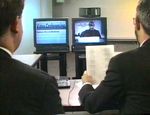
Study warns managers of virtual communication
Scientist in the USA have recently come to the conclusion that it is advisable to be cautious with video conferences. In the study " Videoconferencing in the Field: A Heuristic Processing Mode " from the Institute for Operations Research and the Management Sciences is shown that it is more exhausting for participants of video conferences to process and to integrate information than during a personal conversation. It is particularly problematically if in video conferences decisions are taken. At the tests it turned out that participants of a video conference are more strongly influenced by the appearance of a speaker, while probands face-to-face were paying stronger attention to arguments. For members of European works councils it can be particularly problematic if they are informed by central management in the context of a transnational restructuring plan only by video conference. The missing possibility for the personal interaction impedes the discussion and the use of all action possibilities, which the consultation procedure offers. Suggestions may not reach at all the level of decision; at the end the unilateral decision-making by the employer is cemented more easily through this.
Such technical possibilities should only serve as support of direct contacts and not as a substitute for EWC meetings. A negative example is the EWC agreement of the call centre operator Transcom WorldWide from Luxembourg, which does not grant the steering committee any other form of communication (see report in EWC News 2/2008).
|
|
Since February 2009 the internet page of the trade union ver.di offers a multilingual information platform for the rotogravure industry. Besides EWC topics there are also many workplace and trade union information in six languages available.. Trade union research institutes jointly present themselves
The British trade union Unite describes the consequences of several judgements of the European court of justice for the employee rights in the European single market on an internet page. Four cases, including Viking Line and Vaxholm (see report in EWC News 4/2007), judge the freedom to strike and social achievements lower than the freedom of establishment and economic freedom. With a petition Unite wants to support the demands for a social Europe.
Verbal understanding in the European single market reaches fast the borders, primarily with regards to special vocabulary and technical concepts. With the financial help of the EU the project EUCAM (Multilingual Communication in the European Car Manufacturing) which presents its work on its own internet page was carried out. Project partners are besides IG Metall and the European Metalworkers’ Federation (EMF) also the motorcar group Daimler and partners in the UK, Hungary and Lithuania. We have arranged numerous further interesting links in a link collection.
|
 Rotogravure information in six
languages
Rotogravure information in six
languages

 Communication in the motorcar production
|
11. New
publications
|
|
This English-speaking book which has been published in January 2009 analyses the role of the global trade union federations in international labour relations and presents their cooperation in multinational companies. One case study, for example, examines the relationship of the International federation of chemistry and mining trade unions (ICEM) with the British South African raw material group Anglo American and how the national trade unions in South Africa, Ghana and Colombia cooperate with the company -- with positive results for the employees. It is an interesting book for everyone who has to deal with worldwide issues be it as elected workers' representatives in the EWC, in national trade unions or as a scientist.
Current review of industrial relations in Europe
A focal topic brochure of WSI-Mitteilungen devoted itself in February 2009 to the comparison between the German and Dutch model of workers' representation. A special aspect is the internationalization, connected with action possibilities of works councils in multinational companies. One of the contributions examines the future of co-determination in the Netherlands. The brochure is only available in German.
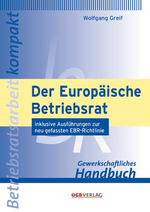
Only a few weeks ago the final version of the revised Directive on the European works council was published and the first manual which comprehensively takes into account the new legal position is already available. Wolfgang Greif, head of the European department of the private employees trade union (GPA) in Vienna, explains therein not only the political and legal bases of the EWC but also delivers check lists for EWC agreements and useful tips for the foundation and development of an Europe-wide employee representation. At present, there isn't any other German language publication yet, which represents the new legal position in a detailed way. This book having been published in March 2009 should therefore not be missed in any EWC office. The following information is only available in German:
We have compiled additional technical literature on a special page.
|

 In January 2009 the European
Commission presented the new report for developments of industrial
relations within the years 2006 to 2008. It contains a listing of
legislation and documents of the social dialog, court decisions on
labour law, a reflection on trends of collective bargaining policy and
on the trade union membership figures. The report is published in
English every two years, an abstract is available in German and French.
In January 2009 the European
Commission presented the new report for developments of industrial
relations within the years 2006 to 2008. It contains a listing of
legislation and documents of the social dialog, court decisions on
labour law, a reflection on trends of collective bargaining policy and
on the trade union membership figures. The report is published in
English every two years, an abstract is available in German and French.
|
12. Training and consultancy
network:
Examples of our work
|
|
The special negotiation body (SNB) of Takeda Pharma constituted itself in London on January 19th and 20th, 2009. Till now, the Japanese company does not have an European works council. Werner Altmeyer from the training and consultancy network " euro-workscouncil.net " was appointed expert (see report in EWC News 3/2008).
European political conference of IG BCE
Participation in ethic Directive in U.S. group
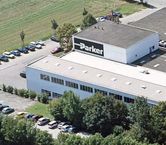
The German works councils of Parker-Hannifin want to use their right for codetermination at the ethic Directive of the U.S. engineering group and to complete an works agreement at national level. The advice was carried out by Dr. Reingard Zimmer of the training and consultancy network " euro-workscouncil.net ", who assisted for the first time the German central works council at a meeting on this topic in Würzburg on January 29th, 2009. The European works council formed according to British law in 2003 also wants to deal with this topic.
SE trainings in two companies
On February 12th, 2009 a prelude event for the German works councils took place at the seat of Warema in Marktheidenfeld; the group works council of Germanischer Lloyd was trained in Hamburg by the training and consultancy network " euro-workscouncil.net " on March 16th, 2009. The special negotiation bodies shall soon be called for the constituting meeting.
A Swiss pharmaceutical company wants to adapt EWC agreement
|


|
13. Details
of seminars planned
|
|
Registrations are possible for the following seminars and workshops co-made by us (in German):
The new EWC Directive -- What comes towards us there? Specialist conferences for European works councils 07. -- 8-5-2009 in Rome 22. -- 23-6-2009 in in Liège 30-9 -- 02.10.2009 in Paris (main emphasis: Restructurings)
Customization of old EWC agreements Workshop for European works
councils
Institutions, politics, European works councils 14. -- 16-10-2009 in Bad Orb
Seminars of the institute for further education of works councils (ifb)
Basic seminar: The way to the European works council 20.10 -- 23-10-2009 in Würzburg
Advanced seminar: Practice knowledge, EWC special 02. -- 5-6-2009 in Cologne 17. -- 20-11-2009 in Nuremberg
Workshops of ver.di-federal office
In the year 2004 an cross-sectoral workshop of the ver.di federal office for European works councils took place for the first time. In view of the new EWC Directive there are two appointments in 2009:
The revision of the EWC Directive
Basis knowledge and practice of the EWC work 02. -- 4-9-2009 in Berlin
As part of a further education series for trade union officers and works council members the academy of Ruhr university Bochum offers the following:
Training for Europe, the European works council Concepts, distribution, practice experiences, development prospects 30. -- 31-10-2009 in Bochum
In-house events Please find a survey of possible subjects of in-house events here: |
 Europe
for trade union officers of IG Metall
Europe
for trade union officers of IG Metall
 17. -- 19-6-2009 in Berlin
 Further
education at Ruhr university
Further
education at Ruhr university|
14. Imprint
|
EWC News is published by: Training and consultancy
network "euro-betriebsrat.de" GbR Von-der-Tann-Straße
4, D-20259 Hamburg www.euro-workscouncil.net (English) www.euro-ce.org
(French) Authors
collaborating on this issue: Werner Altmeyer,
Carmen Bauer, Ulrich Zachert,
Reingard Zimmer Distributor
of the German
version: 11,911 readers Distributor of the English version: 1,498 readers Distributor of the French version: 1,179 readers Newsletter
archive: www.ewc-news.com
We
are always pleased to
receive comments and suggestions in relation to this newsletter as well
as reports on your EWC activities. Please write us at: info@euro-workscouncil.net
www.euro-betriebsrat.de (German)